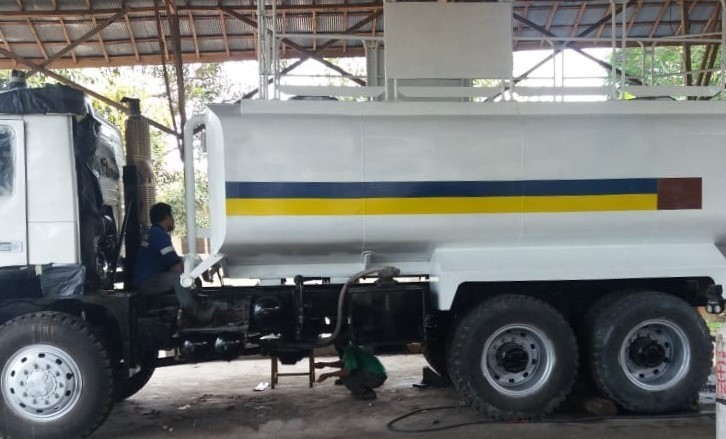
Trucks and trailers are vehicles that are often used to transport goods. Trucks and trailers are two types of heavy vehicles that have fundamental differences in terms of their operation. Both transportation companies and truck and trailer drivers must understand these differences to optimize efficiency and safety on the road. Below will explain some of the main differences between regular trucks and trailers.
1. Size and Weight
One of the most striking differences between regular trucks and trailers is their size and weight. Regular trucks usually have a load of up to 30 tons while trailer trucks have a larger capacity and vary from 20 tons to 60 tons. Regular trucks usually have smaller and lighter bodies than trailers. Trailers, on the other hand, have a long and heavy structure because they have to carry a larger load. This affects the way the driver controls the vehicle. Regular trucks are easier to maneuver and park, while trailers require extra attention and more space.
2. Transmission System
The transmission system is another aspect that differs between regular trucks and trailers. Regular trucks have a 6-speed transmission system, while trailers have a 9, 10-speed, or even more transmission system with an average power of over 260PS. Trailers also have a *Crawler* Gear mode which has a function when the trailer meets an uphill road so that the engine does not suddenly die. Truck and trailer drivers need to understand how to operate this transmission system in order to drive it safely.
3. Brake System
The Brake System is an important component in the safety of heavy vehicles. Regular trucks and trailers have differences in their brake systems. The trailer brake system is divided into 2 brakes, the brake for the truck head and the brake for the trailer. At the rear of the truck, there must be 2 hoses connecting to the trailer with the function of filling water in the trailer tank and regulating the relay on the *brake chamber* on each wheel. Truck and trailer drivers must understand how this brake system works and carry out routine maintenance to maintain safety during the trip.
Driving a trailer truck requires different skills and knowledge than driving a regular truck. Differences in size, weight, transmission system, brake system, and so on affect the way of driving. To be able to drive safely, make sure drivers get proper training before driving a trailer truck. Also, know about the limits of the vehicle, and understand how your vehicle responds in various situations. Always drive carefully and alertly. With a good understanding, drivers can optimize their performance and reduce the risk of accidents on the highway.
Read other articles: Choosing the Right Trailer for Efficiency and Safety