In heavy industrial operations such as mining, construction, logistics, and the energy sector, trailers play a crucial role in supporting the movement of materials and equipment. With high workloads and often extreme operating conditions, safety systems on trailers become a critical factor that cannot be overlooked. One of the most important components in maintaining operational safety is the brake system.
Many operators or field technicians tend to assess braking performance using a simple indicator: whether the brakes still feel “strong” or not. However, in a trailer braking system, component precision is far more important than simply having a strong braking force. A brake system that appears to function normally may not necessarily be operating under optimal conditions, especially if there is an imbalance among its internal components.
When the braking system no longer operates with proper precision, the risks go beyond reduced braking performance. It may lead to damage in other components or even system failure when the trailer is carrying heavy loads. Therefore, understanding how the drum brake system works and the function of each component is essential for professionals in industries that rely heavily on the reliability of trailer fleets.
How the Drum Brake System Works
The drum brake system is one of the most commonly used braking systems in industrial trailers. This system is known for its strong construction, ability to withstand heavy loads, and consistent performance in demanding operating conditions.
The working principle of a drum brake is relatively simple but highly effective. When the driver presses the brake pedal on the towing vehicle, air pressure in the braking system activates the brake chamber connected to the trailer braking mechanism. This pressure is then transferred to mechanical components that rotate the camshaft.
The camshaft rotates and pushes the brake shoe, which is lined with brake lining, toward the inner surface of the brake drum. When the brake lining presses against the inner surface of the rotating drum, friction is created. This friction generates the braking force that slows down the rotation of the wheel until the trailer eventually stops.
For the system to function effectively, each component must operate with the correct level of precision. The spacing between components, the pressure generated, and the friction surfaces must remain within the technical tolerances designed by the manufacturer. If any component experiences wear or dimensional change, braking performance can decrease significantly.
The Role of Brake Drum, Brake Lining, and Camshaft
Within a drum brake system, several key components play a crucial role in maintaining braking performance. Three of the most important components are the brake drum, brake lining, and camshaft.
The brake drum is a cylindrical component attached to the wheel hub and rotates together with the trailer wheel. The inner surface of the drum serves as the friction area for the brake lining. The material quality and surface precision of the brake drum greatly influence braking effectiveness. If the drum becomes deformed, cracked, or unevenly worn, the contact with the brake lining will not be optimal.
Meanwhile, the brake lining is a special friction material attached to the brake shoe. Its function is to create friction against the brake drum. Brake lining materials are designed to withstand high temperatures and heavy pressure generated during braking. However, over time, brake lining naturally wears down due to constant friction. When the lining becomes thinner, braking power decreases, and the stopping distance becomes longer.
Another critical component is the camshaft. The camshaft converts mechanical movement within the braking system into the force that pushes the brake shoe toward the drum. As the camshaft rotates, the cam profile pushes the brake shoe outward so the brake lining can press against the drum surface. The camshaft must rotate smoothly and precisely. If this component experiences wear or insufficient lubrication, the braking force distribution can become uneven.
These three components work together as an integrated system. When the brake drum rotates, the camshaft activates the brake lining to create friction strong enough to stop the wheel. Without proper precision in each component, the braking system will not perform optimally.
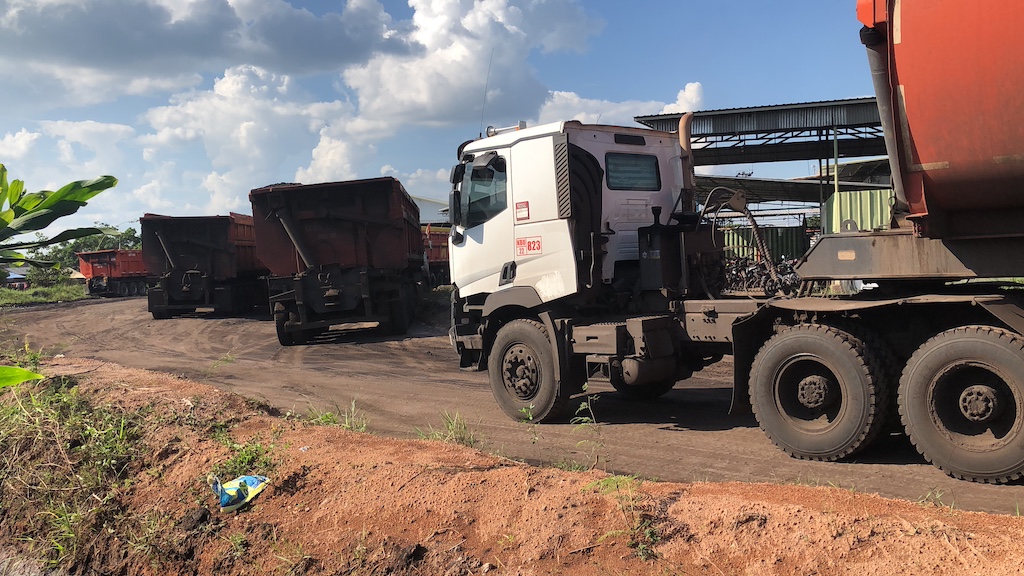
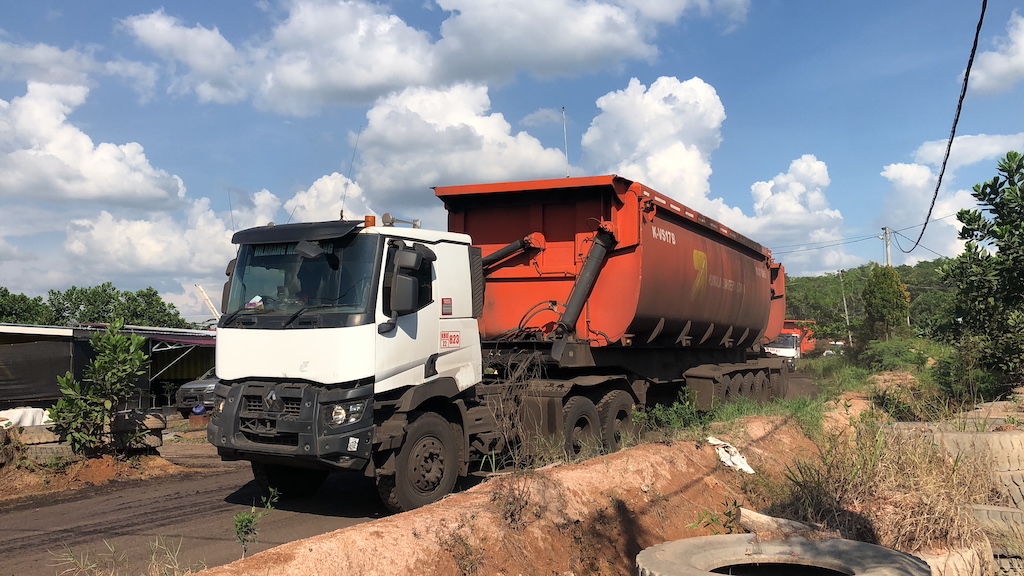
Trailer heavy equipment in a mining area (source: TDU)
Risks of an Unbalanced Brake System
One of the most common problems in trailer braking systems is uneven or unbalanced braking performance. This condition is often not visible at first glance, but its impact can be significant for both safety and operational efficiency.
An unbalanced brake system may occur due to several factors, such as uneven brake lining wear, brake drum surfaces that are no longer precise, or camshafts that do not move smoothly. When this happens, the braking pressure applied to each wheel becomes inconsistent.
As a result, some wheels may brake more strongly than others. This condition can cause the trailer to become unstable during braking, especially when carrying heavy loads or driving on downhill roads. Over time, this imbalance can also accelerate damage to other components such as bearings, axles, and suspension systems.
Additionally, an imprecise brake system may lead to excessive heat buildup in braking components. Uneven friction creates hot spots on the brake drum and lining, which may eventually cause material deformation or component failure.
The greatest risk occurs when the trailer operates under extreme conditions, such as carrying maximum loads or performing sudden braking. During these critical moments, a brake system that lacks precision may fail to respond as required, increasing the risk of accidents and operational downtime.
Conclusion
A trailer brake system is not simply about whether the brakes still feel strong. Behind what appears to be normal braking performance, there are many technical factors that determine whether the system is still operating within safe precision limits.
Components such as the brake drum, brake lining, and camshaft play essential roles in maintaining balanced and effective braking performance. When one of these components begins to wear or lose precision, the entire braking system can be affected, potentially leading to safety risks and operational losses.
For this reason, regular inspection and proper maintenance of the brake system are essential for companies that rely on trailers in their daily operations. Ensuring that each component operates within the correct tolerance levels. Not only protects drivers and equipment, but also helps minimize the risk of downtime that could disrupt productivity.
Understanding that precision in braking systems is more important than simply having a strong braking force is a crucial step toward maintaining optimal trailer performance across various industrial operating conditions.
Read other Articles: Brake Drum: Functions and Main Components