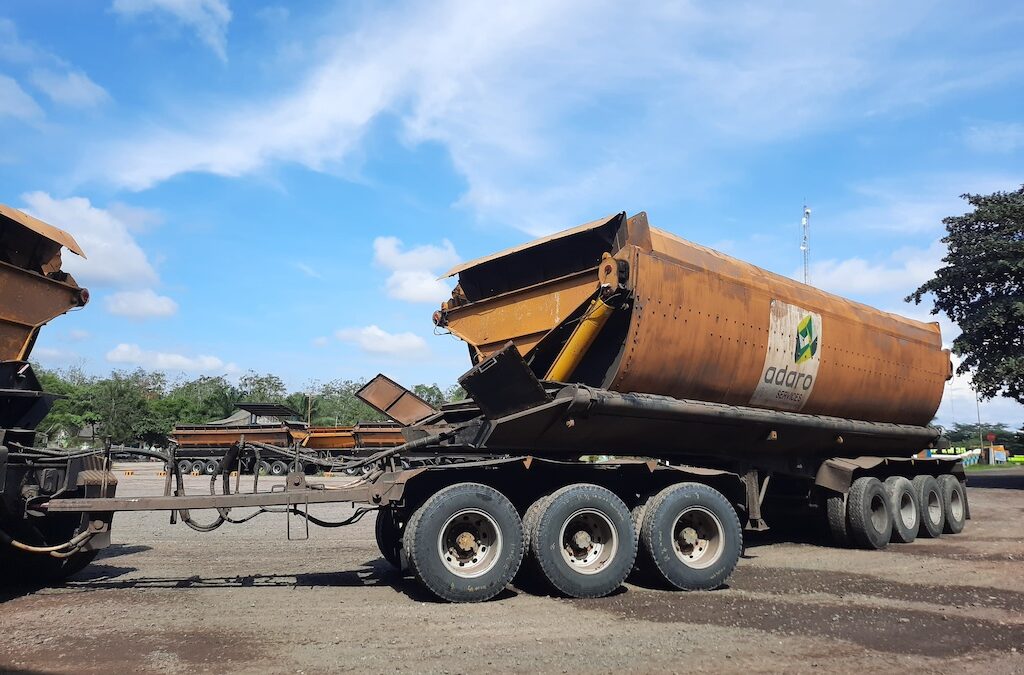
In trailer operations across industries such as mining, construction, heavy equipment, and logistics, vehicle condition is often judged by its outward appearance. As long as the trailer is still running, components appear intact, and there are no obvious signs of major damage, many assume the unit is still in safe working condition.
However, a trailer that looks fine is not always ready for operation. Many critical components experience gradual wear that is not visible to the naked eye. These components may still function, but they have already exceeded safe technical tolerances.
This type of issue is one of the main causes of unexpected downtime in the field. Not due to major failures, but from the accumulation of small, undetected wear over time. Therefore, understanding which components are most likely to fail without being noticed is essential to maintaining operational reliability and safety.
Kingpin & Wearing Ring: Hidden Looseness
The kingpin is the primary connection between the trailer and the truck via the coupling system. It continuously carries vertical loads and towing forces during operation. Over time, the kingpin may experience wear in its diameter, even though it still appears visually normal. This wear leads to increased clearance between components, causing the connection between the trailer and the fifth wheel to lose precision.
Meanwhile, the wearing ring acts as a protective layer that reduces friction in the coupling area. When the wearing ring becomes worn, metal-to-metal contact increases, accelerating damage to both the kingpin and the coupling plate. The challenge is that these conditions are rarely visible. The trailer may still operate normally, but its stability has already declined. If left unaddressed, the risks include excessive movement, instability, or even trailer detachment under extreme conditions.
Brake Lining & Brake Drum: Feels Normal, But Not Precise
The braking system is one of the most critical components in a trailer. However, issues with brake lining and brake drum often go unnoticed in the early stages. Worn brake lining reduces friction efficiency, but initially, the brakes may still feel “effective.” This can lead operators to assume everything is still functioning properly, even though braking performance has already declined.
At the same time, brake drums can experience uneven wear or deformation due to high temperatures. This condition prevents proper contact between the lining and the drum, resulting in uneven braking force distribution. The impact may not be immediately noticeable, but under heavy loads or downhill conditions, braking performance can drop significantly. Risks include longer stopping distances, overheating, and even brake failure.
Suspension Bushing: Gradual Loss of Stability
Bushings in the suspension system play a crucial role in absorbing vibrations and maintaining trailer stability. They act as buffers between metal components to reduce friction and ensure proper alignment. However, bushings are made from materials that naturally wear over time. When they become cracked, hardened, or worn, movement between components becomes less stable and less controlled.
The symptoms are often subtle—such as minor vibrations or changes in handling. But if ignored, this can lead to uneven load distribution, irregular tire wear, and damage to other suspension components. In demanding environments like mining sites or construction projects, worn bushings can accelerate the degradation of the entire suspension system.
Slack Adjuster: A Small Component with a Big Impact
The slack adjuster is responsible for maintaining the correct clearance between the brake lining and brake drum, ensuring responsive braking performance.
Issues with the slack adjuster are often overlooked because they are not easily visible. If it does not function properly, the clearance in the braking system can become either too loose or too tight.
As a result, the braking system may:
- Become delayed in response due to excessive clearance
- Become overly sensitive or prone to locking if the clearance is too tight
In addition, uneven slack adjuster performance across wheels can cause unbalanced braking, increasing the risk of losing stability during stopping. Because of its critical role, the slack adjuster must always be maintained and checked regularly.
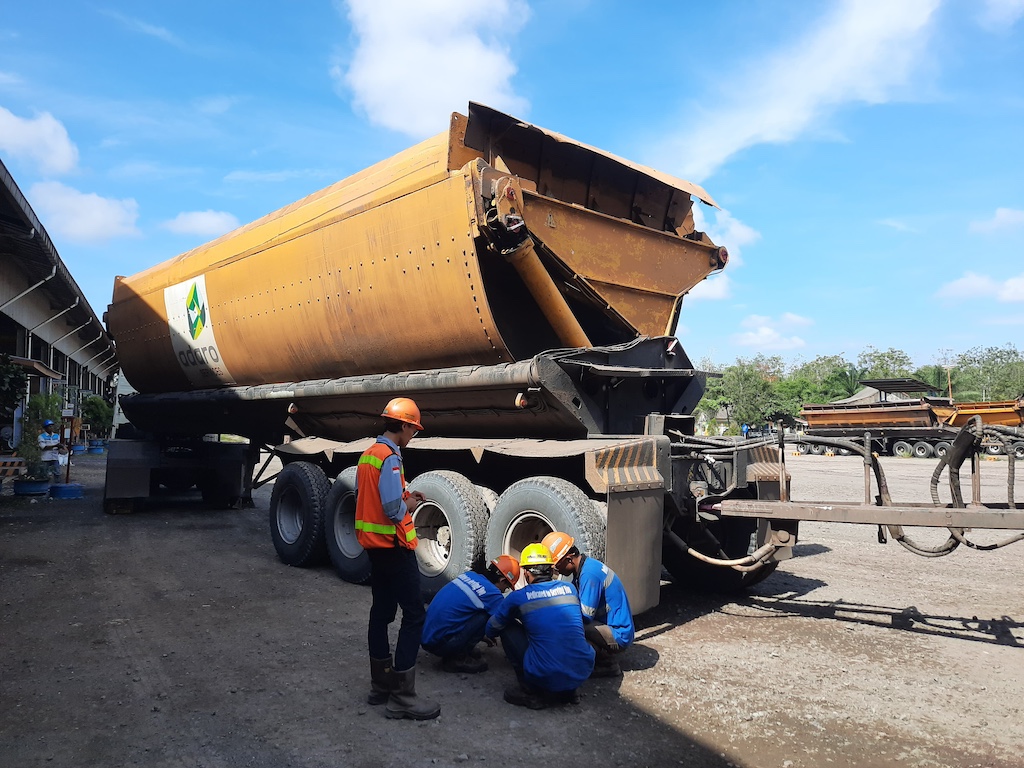
Dump trailer inspection and maintenance activities (Photo by: TDU)
Operational Impact: From Performance Loss to Downtime
All of the components mentioned share one common characteristic: they do not show obvious signs of failure, but their impact is significant. When wear is left unaddressed, the effects accumulate and can lead to serious operational issues, such as:
- Decreased overall vehicle performance
- Increased fuel consumption due to inefficiency
- Chain damage to other components
- Unexpected downtime during peak operations
- Increased risk of accidents due to system failure
In industries that rely heavily on fleet reliability, downtime not only results in financial loss but can also disrupt the entire operational chain. Therefore, the best approach is not to wait for failure, but to implement regular inspections and preventive maintenance.
Conclusion
The most dangerous trailer components are not always the ones that are visibly damaged, but those that appear normal yet no longer operate within safe limits. Components such as the kingpin, wearing ring, braking system, suspension bushings, and slack adjuster often fall into this category.
Understanding the function and potential issues of these components is key to maintaining safety and operational efficiency. Through routine inspections, the use of high-quality spare parts, and proper maintenance, risks can be minimized before they develop into major problems.
In heavy industries, attention to small details often makes the difference between smooth operations and costly disruptions. Because ultimately, the reliability of a trailer depends not only on major components but also on the smaller ones that work quietly behind the scenes.
Read other Articles: Optimizing the Use of High-Quality Trailer Spare Parts