
Introduction
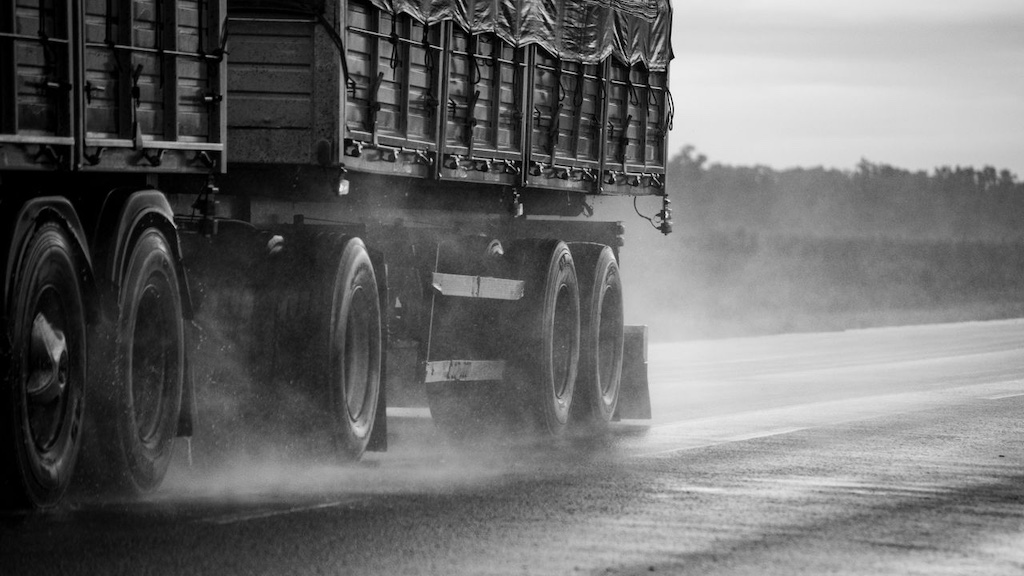
Rain can increase operational risks for trailers used in mining, construction, heavy equipment, and industrial transportation. These risks also affect vehicles transporting materials across various industrial environments. Rain makes road surfaces wet and can reduce tire traction, increase braking distances, and impair driver visibility. It can also affect the performance of various vehicle components.
These risks become even more important when a trailer is carrying a heavy load. The greater the total vehicle and cargo weight, the more energy must be controlled during braking or directional changes. This can increase the demands on the vehicle’s braking and handling systems. Wet road conditions can increase stopping distances and make it harder for vehicles to stop safely. They can also increase the risk of skidding if drivers fail to adjust their speed and driving inputs accordingly.
In mining and construction environments, the challenges can be even more complex. Rain can turn unpaved roads into muddy surfaces, create standing water, reduce traction, and increase the risk of losing vehicle stability. On paved roads, meanwhile, a layer of water on the surface can reduce the effective contact between the tires and the road.
Therefore, trailer safety in rainy conditions should be considered as part of the vehicle’s overall safety system. Safety does not depend solely on the driver’s ability, but also on tire condition, the braking system, lighting, wipers, windshield condition, road conditions, trailer load, and the operating procedures in place.
Understanding how rain affects braking distance, tire and brake system conditions, visibility, and driving behavior can help reduce accident risks and keep trailer operations safe.
Why Does Rain Increase Trailer Operating Risks?
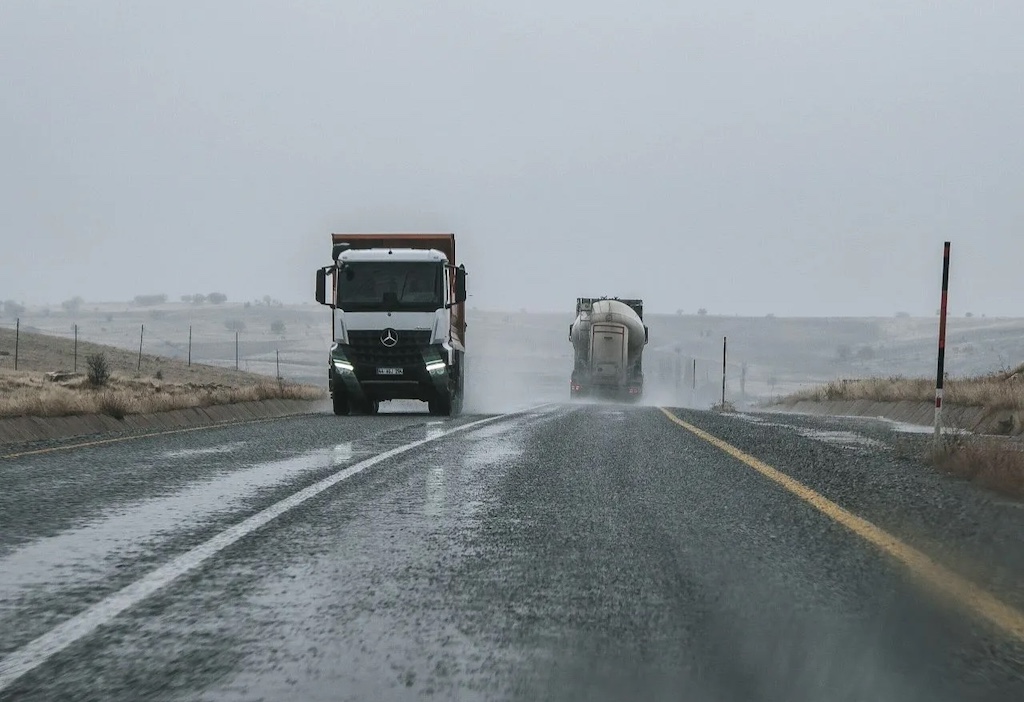
When it rains, environmental conditions can change relatively quickly. A road surface that was previously dry can become wet, slippery, or covered with standing water. At the same time, the driver’s visibility may be reduced by rainfall, mist, water spray from other vehicles, and lower lighting conditions.
Trailers have different characteristics from passenger vehicles because they generally carry heavier loads. Load distribution, vehicle length, the number of axles, coupling condition, and braking system characteristics can all affect how a trailer responds during braking or maneuvering.
Under rainy conditions, changes in the grip between the tires and the road become an important factor. Tires with reduced traction have a more limited ability to transfer braking and steering forces to the road surface.
In addition, standing water can increase the risk of hydroplaning or aquaplaning. This occurs when a layer of water causes the tires to lose some of their effective contact with the road surface. When this happens, the vehicle’s ability to respond to steering and braking inputs can be reduced.
In industrial environments, additional risks can result from changes in road conditions caused by rain. Mining roads or project roads that were previously firm can become soft and muddy. Standing water can cover potholes, rocks, or uneven surfaces, making the actual road condition more difficult for the operator to identify.
For this reason, operating a trailer in rainy conditions requires greater attention to vehicle condition, road conditions, speed, following distance, and the driver’s ability to anticipate changing situations.
Trailer Braking Distance in Rain
One of the most important aspects of trailer safety in rainy conditions is braking distance.
Braking distance is the distance a vehicle travels from the moment the braking system begins to operate until the vehicle comes to a complete stop. However, in real-world conditions, the total distance required to stop is not determined solely by the braking system.
In simple terms, total stopping distance consists of reaction distance and braking distance. Reaction distance is the distance the vehicle travels while the driver recognizes a situation and begins braking. Braking distance is the distance required for the vehicle to actually reduce its speed until it comes to a stop.
How Rain Affects Trailer Braking Distance
On wet roads, braking distance can increase because the available traction between the tires and the road surface is reduced. This means that a vehicle traveling at the same speed may require a longer distance to stop compared with dry road conditions.
This becomes even more important for trailers carrying heavy loads. Greater vehicle mass means greater kinetic energy that must be reduced during braking. Therefore, trailer drivers should maintain sufficient braking space and avoid following the vehicle ahead too closely.
Speed also has a significant effect on stopping distance. As speed increases, the distance required to stop can increase significantly. Therefore, reducing speed during rain is not only intended to improve driving comfort, but also to provide more time and space for the driver to respond to changing conditions.
Braking Systems for Heavy-Duty Trailers
The risk can become even greater on downhill roads. Gravity causes the vehicle to continue gaining a downward component of force. If the driver relies solely on the service brakes to control speed on a long downhill section, the brake system may experience increased temperatures.
For heavy-duty applications, the use of engine brakes, retarders, or other auxiliary braking systems can help reduce the load on the service brakes. However, their use should follow the vehicle configuration, operating procedures, and manufacturer’s recommendations.
Tire and Brake System Conditions
Tires and the braking system are two important components of trailer safety, especially when a vehicle operates in wet conditions.
Tire Condition
Tires are the only part of the vehicle that directly contacts the road surface. Therefore, tire condition has a major influence on the vehicle’s ability to brake, accelerate, and change direction.
During rain, tread condition becomes even more important. Tread patterns help channel water away from the contact area between the tire and the road surface. Tires with worn tread may have a more limited ability to manage water, especially when the vehicle travels through areas with significant standing water.
Tire pressure should also be monitored. Tire pressure that does not meet the specified requirements can affect the tire’s contact characteristics, vehicle stability, and tire wear.
For heavy-duty trailers, tire inspections should be performed regularly according to the company’s maintenance procedures. Inspections should not only check tire pressure but also examine tread condition, uneven wear, sidewall damage, foreign objects, and other physical conditions.
If a trailer uses multiple axles and a large number of tires, the condition of all tires should be monitored because differences in tire condition can affect the overall characteristics of the vehicle.
Brake System Condition
The braking system must be capable of operating consistently under various operating conditions. During rain, brake system inspections become even more important because wet road surfaces can increase the demands placed on the braking system.
Depending on the vehicle configuration, a trailer braking system may include components such as brake discs or brake drums, brake pads or brake linings, calipers, actuators, brake chambers, hoses, valves, and other supporting components.
Friction material wear needs to be monitored. Brake pads or brake linings that are approaching their wear limits can affect braking performance and should be addressed according to the applicable maintenance schedule.
The condition of brake discs and brake drums should also be inspected. Excessive wear, damage, or surfaces that do not meet specifications can affect the contact between the friction material and the braking surface.
For pneumatic braking systems commonly used on commercial vehicles and trailers, checking air pressure and pneumatic system components is also an important part of maintenance. Air leaks or problems with pneumatic components can affect braking system response.
In addition, the trailer braking system must operate properly together with the towing vehicle. The tractor and trailer braking systems should have compatible configurations so that braking forces can be applied effectively and safely.
Maintenance should be performed according to the manufacturer’s specifications and applicable maintenance schedules. Inspections should not only be carried out when a problem occurs, but also as part of a preventive maintenance program.
Visibility When Driving a Trailer in Rain
In addition to braking and traction, visibility is another important factor in trailer safety during rainy conditions.
Rain can reduce the driver’s visibility. Water on the windshield, spray from vehicles ahead, fog, and low-light conditions can make objects in front of the vehicle more difficult to see.
For large and long trailers, limited visibility can create additional challenges. Drivers need to pay attention to the area in front, beside, and behind the vehicle, as well as its blind spots.
Windshield and Wipers
A clean windshield helps the driver maintain a clearer view of the road. During rain, windshield wipers are essential for removing water from the glass surface.
Worn wiper blades can leave streaks or areas of water that are not properly cleared. This can interfere with visibility, particularly during heavy rain or when facing headlights from oncoming vehicles.
Therefore, wiper blades and the windshield washer system should be inspected regularly.
Vehicle Lighting
The lighting system also plays an important role when visibility is reduced.
Headlights, taillights, brake lights, turn signals, marker lights, and other lights installed on the vehicle and trailer should be maintained in good working condition.
Lighting not only helps the driver see the road ahead, but also helps other road users recognize the presence of the trailer, especially during heavy rain or low-light conditions.
Mirrors and Blind Spots
Trailer drivers also need to pay attention to the condition of the vehicle’s mirrors. Rainwater and spray from other vehicles can make mirrors more difficult to use.
Trailers have blind spots that need to be considered when changing lanes, turning, or maneuvering in work areas. Drivers should check the surrounding area before making a maneuver and follow the communication procedures applicable to the work environment.
In construction and mining areas, a spotter or banksman may be required to assist with vehicle maneuvering under certain conditions, particularly in confined areas or locations with limited visibility.
Tips for Safe Trailer Driving in Rain
Trailer safety in rainy conditions does not depend solely on vehicle condition. The way the driver operates the vehicle also plays an important role.
Reduce Speed
Reducing speed is one of the simplest ways to increase the safety margin when driving in the rain.
A lower speed gives the driver more time to identify hazards and provides greater braking distance.
Speed should also be adjusted according to road conditions. The applicable speed limit does not necessarily mean that the vehicle should travel at the maximum permitted speed when environmental conditions are poor.
Increase Following Distance
During rain, avoid maintaining an unnecessarily short distance from the vehicle ahead.
A greater following distance provides additional time to react if the vehicle ahead brakes suddenly.
This is especially important for trailers carrying heavy loads because stopping distance can increase, particularly on wet road surfaces.
Avoid Sudden Braking and Maneuvers
Hard braking or sudden changes in direction can increase the risk of losing traction.
When the road is wet, steering, acceleration, and braking inputs should be smooth and controlled.
Sudden changes in direction can become more dangerous when the trailer is carrying a load with an unsuitable weight distribution or when the vehicle is traveling on a slippery surface.
Watch Out for Standing Water
Standing water is not always as shallow as it appears from the driver’s seat.
Drivers should exercise caution when approaching standing water because hydroplaning can occur, especially if the vehicle is traveling at high speed or the tires are not in optimal condition.
Standing water can also conceal potholes, rocks, or damaged sections of road. In mining and construction areas, this requires particular attention.
Avoid Using Cruise Control When Conditions Are Unsuitable
On wet or slippery roads, the use of cruise control should be considered carefully and in accordance with the manufacturer’s recommendations and vehicle operating procedures.
The driver should maintain full control of the vehicle’s acceleration when road conditions can change quickly.
For heavy-duty vehicles, cruise control policies should follow the company’s safety procedures and the vehicle manufacturer’s specifications.
Use Auxiliary Braking Systems Properly
On heavy-duty vehicles, auxiliary braking systems such as engine brakes or retarders can help control speed and reduce the load on the service brakes.
However, their use should be adjusted according to road conditions, vehicle configuration, and manufacturer procedures.
On very slippery surfaces, overly aggressive braking input at a particular axle can affect vehicle stability. Therefore, operators need to understand the characteristics of the braking system being used.
Check the Trailer and Load Condition
Load distribution is an important part of trailer safety.
Loads should be positioned and secured according to applicable procedures. Improperly distributed loads can affect vehicle handling and stability.
Under rainy conditions, these risks can become greater because overall vehicle traction is already reduced.
Before traveling, operators should ensure that the load is properly secured and that there has been no change in its position that could affect trailer balance.
Pre-Trip Inspection Before Operating a Trailer in Rain
One way to improve safety is to conduct a pre-trip inspection before the vehicle begins operation.
The inspection may include tire condition, tire pressure, braking system, lighting system, windshield, wipers, mirrors, coupling system, trailer connections, and load condition.
Tires should be checked to ensure that there is no damage, excessive wear, or pressure outside the specified range.
The braking system should be inspected according to the vehicle’s procedures, including the condition of friction components and the actuation system.
All lights should function properly so that the vehicle can be clearly seen by other road users.
Wipers and the windshield should also be in a condition that supports adequate driver visibility.
In addition, the coupling between the tractor and trailer should be checked to ensure that the mechanical connection and other supporting systems are properly secured.
A pre-trip inspection should not be treated as a formality. It is an opportunity to identify potential problems before the vehicle enters the operating area.
Trailer Safety in Rainy Conditions in Mining and Construction Areas
Rainy conditions in mining and construction areas have different characteristics compared with public roads.
Road surfaces can change significantly after rainfall. A road that was previously firm can become muddy, while areas with certain slopes can become more difficult to navigate.
Standing water can also conceal road conditions. Potholes, rocks, loose materials, and changes in elevation may not be clearly visible.
Therefore, trailer operations in these environments should follow site-specific safety procedures.
Site management should consider weather conditions when determining whether a particular route remains safe to use. Under certain conditions, operations may require speed restrictions, route changes, the use of spotters, or temporary suspension of activities.
Communication between operators, supervisors, dispatchers, and field teams is also an important part of risk control.
Safety is not solely the responsibility of the driver. Vehicle condition, road design, company procedures, load management, and operational decisions all contribute to trailer safety.
https://www.pexels.com/photo/trucks-on-rainy-highway-under-overcast-sky-29526703/
The Importance of Preventive Maintenance for Trailer Safety
Preventive maintenance plays an important role in keeping trailers ready to operate under changing conditions.
Regular inspections and component replacement can help prevent component failures that could affect safety.
For braking systems, maintenance may include inspecting brake pads or linings, discs or drums, actuators, brake chambers, air lines, valves, and other related components.
For wheel assemblies, inspections may include tires, wheel components, bearings, and supporting components.
Meanwhile, visibility systems should include inspections of lights, wipers, windshields, mirrors, and other components that help drivers see their surroundings.
Preventive maintenance programs should be developed based on manufacturer recommendations, operating hours, mileage, duty cycle, environmental conditions, and fleet operating experience.
For vehicles operating in demanding environments such as mining or construction, inspection intervals may need adjustment. These adjustments should reflect actual field conditions.
Conclusion
Rain can increase various risks during trailer operations, including reduced traction, increased braking distance, limited visibility, and changes in road surface conditions.
For heavy-duty vehicles carrying large loads, these risks require additional attention because the vehicle needs sufficient space and time to brake and change direction safely.
Braking distance, tire condition, brake system condition, visibility, and driver behavior are among the key factors in maintaining trailer safety during rainy conditions. Tires in good condition help maintain contact with the road, while a properly maintained braking system helps ensure that the vehicle can reduce its speed effectively.
At the same time, the windshield, wipers, lighting system, and mirrors play an important role in maintaining visibility when rain reduces the driver’s field of view.
Safety also depends on appropriate driving behavior. Reducing speed, increasing following distance, avoiding sudden maneuvers, watching for standing water, securing the load properly, and conducting pre-trip inspections are all measures that can help reduce operational risks.
For mining, heavy equipment, construction, industrial transportation, and other demanding work environments, trailer safety in rainy conditions should be part of a broader safety management system. Combining well-maintained vehicles with properly specified braking and tire systems helps improve trailer safety. Clear operating procedures also support safe operations in changing weather conditions. Operators who understand field conditions can make better decisions to keep trailers safe and reliable.
Read other Articles: Mid-Year Trailer Condition Evaluation: What Should Be Prioritized?