Introduction
The middle of the year is often the right time for companies to evaluate their operational performance. At this point, companies usually review target achievement, productivity, cost efficiency, and the progress of ongoing projects. However, operational evaluations should not focus only on numbers and business targets. The condition of the equipment supporting these activities also deserves the same level of attention.
In mining, heavy equipment, construction, logistics, energy, and other industrial sectors, trailers are important assets that support daily operations. Trailers are used to transport materials, equipment, and heavy loads, often under demanding operating conditions. The more frequently a unit is used, the greater the potential for wear and tear on its components.
By the middle of the year, trailer conditions should be evaluated comprehensively. A unit that has been operating for several months may still look normal and continue to perform its tasks. However, a trailer that looks good externally does not necessarily mean that all of its components are still operating at an optimal level.
Some components may have already experienced wear, increased clearance, or reduced performance without causing any major operational problems yet. If these conditions are not addressed promptly, minor issues can develop into more serious failures and potentially cause downtime during the next operational period.
Therefore, a mid-year evaluation is not only about determining whether the company has achieved its targets. It is also about ensuring that the units used to achieve those targets remain in good working condition and are ready for operation.
Conducting an evaluation in the middle of the year gives companies an opportunity to identify components that are beginning to show signs of wear, address problems before they become major failures, and develop a maintenance strategy for the remaining operational period until the end of the year.
Components with High Operating Hours
One of the first things that should be considered when evaluating trailer conditions in the middle of the year is the condition of components that have accumulated high operating hours.
Each trailer component has different characteristics and different wear rates. Some components may have a longer service life, while others are designed to require regular inspection, maintenance, or replacement.
In intensive operations, component life can be affected by various factors, including frequency of use, load weight, road conditions, operating terrain, weather, and the quality of previous maintenance.
Components that operate under heavy loads and experience repeated friction require additional attention. For example, brake linings used intensively will wear faster than those on units operating under lighter loads. Similarly, bearings that continuously operate under heavy loads and in environments exposed to dust or water may experience accelerated wear.
However, component age should not be the only basis for determining whether a component needs to be replaced. Actual field conditions remain an important factor.
Components with high operating hours should be inspected based on their physical condition, wear level, performance, and compliance with specified technical tolerances. This inspection helps maintenance teams determine whether a component is still suitable for use, requires repair, or should be replaced.
At this stage, maintenance history can also provide valuable information. Data showing when a component was last replaced, how long the unit has been operating, and what types of failures have occurred in the past can help companies determine inspection priorities.
If a component has a history of repeated failures or is approaching its recommended service life, a more detailed inspection should be carried out.
Therefore, a mid-year evaluation can be an opportunity to conduct a component health assessment, which involves evaluating component conditions based on usage data and actual field conditions.
Brake System and Axle
The brake system and axle are two areas that should receive high priority during a trailer condition evaluation.
Both play an important role in safety, stability, and the overall ability of the trailer to operate safely. Problems in either system can directly affect unit performance and potentially lead to downtime.
Brake System Evaluation
The braking system is one of the most critical parts of a trailer. It must be able to control speed and stop the unit effectively, especially when the trailer is carrying heavy loads.
During a mid-year evaluation, inspections may cover several key components, including the brake lining, brake drum, camshaft, slack adjuster, brake chamber, and other supporting components.
Brake linings that are too thin can reduce braking effectiveness. Meanwhile, brake drums that are excessively worn or damaged can affect the contact between braking components.
The camshaft and slack adjuster should also be inspected to ensure that the braking system operates evenly. An imbalance in the braking system can result in uneven braking performance and increase the load on certain components.
In addition to mechanical conditions, the air system should also be inspected to ensure that there are no leaks that could affect air pressure and braking performance.
Inspections should not be based solely on whether the brakes still feel responsive. A component may still function while no longer operating within its ideal condition.
Therefore, physical inspections and measurements based on applicable technical standards should be performed to ensure that the braking system continues to operate effectively.
Axle and Bearing Evaluation
In addition to the brake system, the axle is another critical component that supports the trailer’s load and operates under demanding conditions.
The axle must be able to consistently handle the load throughout the trailer’s operation. An axle that is not in optimal condition can affect unit stability and cause damage to other components.
In the axle and wheel-end areas, inspections may include checking the condition of bearings, seals, grease, hubs, and other supporting components.
Bearings with inadequate lubrication can generate excessive heat due to friction. Meanwhile, damaged seals can allow water and contaminants to enter the system, accelerating bearing damage.
One condition that should be monitored is abnormal heat around the wheel-end area after the trailer has been operating. Unusual noises, vibrations, grease leakage, or changes in component condition can also indicate early signs of a problem.
If any of these signs are identified, further inspection should be carried out before the unit is returned to heavy-duty operations.
Trailer Suspension and Structure
In addition to components directly related to braking and axles, the condition of the trailer’s suspension and structure should also be included in the mid-year evaluation.
The suspension plays an important role in maintaining unit stability and helping distribute the load. During heavy-load operations, the suspension can experience significant stress, particularly when the trailer travels over uneven roads or challenging terrain.
Several components that should be inspected include leaf springs, air suspension, bushings, torque rods, and U-bolts.
Cracked or worn bushings can affect suspension movement. Loose U-bolts can also cause changes in component positioning and affect unit stability.
For trailers equipped with air suspension systems, inspections should include the condition of the air springs, air lines, and other supporting components to ensure that there are no leaks.
The evaluation should also cover the overall condition of the trailer structure. Frames or chassis components with cracks, deformation, or excessive corrosion can reduce the structural strength of the unit.
Structural problems are not always immediately visible because they may occur in hard-to-reach areas or behind other components. Therefore, thorough visual inspections and more detailed checks of critical areas should be carried out regularly.
If a trailer operates in environments with high humidity, exposure to water, mud, chemicals, or other extreme conditions, the risk of corrosion should also be considered.
Continuous corrosion can gradually reduce material strength. If left untreated, it can develop into a serious problem that affects trailer safety and reliability.
Recommended Actions After the Mid-Year Evaluation
After evaluating trailer conditions, the next step is to determine the appropriate action based on the urgency of each finding.
Not every issue requires the unit to be immediately taken out of service. However, every finding should be categorized so that the maintenance team can determine the appropriate priority.
One approach is to classify inspection findings into several categories:
- Critical: Issues directly related to safety that require immediate attention.
- High Priority: Issues that may cause major damage or downtime in the near future.
- Medium Priority: Issues that can still be controlled but need to be scheduled for repair.
- Low Priority: Minor findings that can be monitored and addressed during routine maintenance.
For critical components such as the brake system, axle, and main structural components, inspection priority should be higher.
If a component is approaching its wear limit, the company can plan its replacement before the component actually fails. This strategy helps prevent situations where a trailer suddenly breaks down during operation.
Next Steps After a Trailer Condition Evaluation
Companies should also ensure the availability of spare parts for highly critical components. Not every spare part needs to be kept in large quantities, but components with a high risk of failure and long procurement lead times should be planned for in advance.
A mid-year evaluation can also be the right time to conduct maintenance planning for the remainder of the year.
If the company has projects with higher operational activity during the second half of the year, spare parts and maintenance requirements should be adjusted accordingly.
For example, if trailers will be used more intensively to support mining or construction projects, components such as brake linings, brake drums, bearings, seals, bushings, and suspension components can be prioritized for inspection and preparation.
The evaluation results can also be used to determine whether a unit requires preventive maintenance, corrective maintenance, or more comprehensive repairs.
With proper planning, maintenance can be performed at the most suitable time based on the operational schedule. This is far better than waiting for a unit to fail in the middle of an operation.
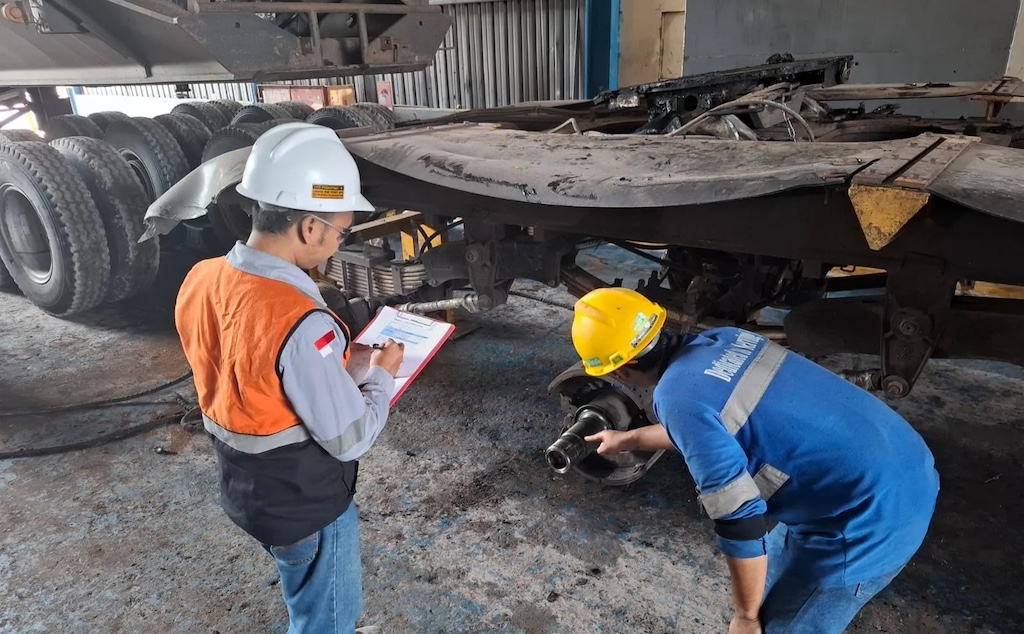
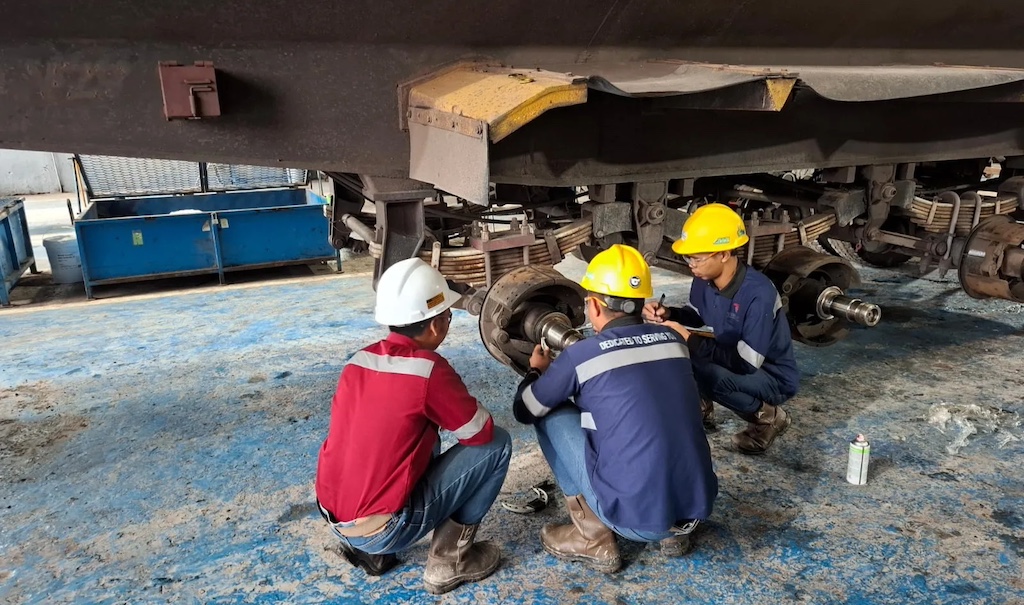
Technicians inspect trailer axle components while documenting the inspection results in the workshop. (Photo Source: TDU)
Why Is a Mid-Year Trailer Evaluation Important for Operations?
Conducting a mid-year trailer condition evaluation gives companies the opportunity to assess unit conditions more objectively.
At the beginning of the year, companies usually develop maintenance plans based on unit conditions and projected operational requirements. However, after several months of operation, actual trailer conditions may change due to real-world field usage.
Workloads may be higher than initially expected. Operating terrain may be more challenging. Even the frequency of trips may increase due to changing project requirements.
This means that a maintenance strategy developed at the beginning of the year may need to be adjusted.
A mid-year evaluation allows companies to conduct a mid-year maintenance review based on the actual condition of their units.
Through this evaluation, companies can determine whether:
- The maintenance schedule is still appropriate.
- Certain components are wearing faster than expected.
- There are recurring failure patterns.
- Spare parts requirements have changed.
- Certain units require special attention.
This information can be used as a basis for improving maintenance strategies for the second half of the year.
In other words, a mid-year evaluation is not simply a trailer inspection. It is also part of a strategy to ensure that units continue to support the company’s operational targets.
Conclusion
The middle of the year is the right time to evaluate the condition of trailers used in operational activities. The evaluation should not focus only on business target achievement, but also on the readiness of the assets that play an important role in supporting daily operations.
Components with high operating hours, brake systems, axles, suspension systems, and trailer structures are some of the key areas that require special attention. Inspecting these components can help companies identify potential problems before they develop into major failures.
The results of the evaluation should also be followed by appropriate action. Components that are approaching their wear limits can be scheduled for replacement, while critical issues should be addressed immediately.
By conducting regular inspections, prioritizing critical components, and ensuring the availability of necessary spare parts, companies can reduce the risk of unplanned downtime and keep trailers ready for operation.
Ultimately, a mid-year trailer condition evaluation is not simply about ensuring that a unit can still operate. More importantly, it is about ensuring that the trailer remains safe, reliable, efficient, and ready to handle the operational demands of the upcoming period.
In industrial operations, maintaining equipment in optimal condition is not only essential for achieving targets but is also an important part of maintaining productivity and long-term business sustainability.
Read other Articles: Trailer Downtime: Causes, Impacts, and How to Prevent It