Introduction
In industries such as mining, heavy equipment, construction, logistics, energy, and other industrial sectors, trailers play an important role in daily operations. Trailers are used to transport materials, equipment, and heavy loads from one location to another. When a trailer operates properly, distribution and field activities can run according to schedule.
However, when a trailer breaks down and has to stop operating, the impact can be much greater than the repair cost alone. This condition is known as downtime, which refers to the period when a unit cannot be used due to technical problems, component failure, or maintenance requirements.
Downtime is often a hidden cost in operations. These costs do not only include spare parts and repair services, but may also involve lost productivity, project delays, unit recovery costs, and disruptions to the overall operational schedule.
Unfortunately, trailer downtime is sometimes considered “normal” in daily operations. Trailers that operate under heavy loads and difficult terrain naturally face a higher risk of wear and tear. However, treating downtime as something unavoidable can cause companies to overlook opportunities to prevent failures before they happen.
With the right maintenance strategy, much of this downtime can actually be reduced. Regular inspections, preventive maintenance, condition monitoring, and spare parts availability are important steps that can help keep trailers operational and ready for use.
Technical Causes of Trailer Downtime
Trailer downtime can be caused by various technical factors, ranging from component wear and damage caused by heavy workloads to system failures that were not detected early.
One of the most common causes is component wear. Trailers used intensively are exposed to continuous friction and stress across various parts. Components such as brake linings, brake drums, bearings, bushings, kingpins, and wearing rings gradually experience changes in condition as operating hours and mileage increase.
The problem is that wear does not always become immediately visible. A component may still look intact and properly installed while actually experiencing reduced performance or exceeding its specified tolerance limits. If this condition is allowed to continue, the component may fail when the trailer is operating under a high workload.
Trailer Components That Most Often Cause Downtime
In addition to wear, the braking system is another potential source of downtime. Worn brake linings, excessively worn brake drums, poorly functioning camshafts, or unbalanced slack adjusters can reduce braking performance.
Problems with the air system can also cause operational disruptions. Leaks in air hoses or pneumatic components can cause unstable air pressure and affect braking performance.
In the axle and wheel-end areas, bearing failure is another risk that needs to be monitored. Bearings with inadequate lubrication, water or dirt contamination, or damaged seals can generate excessive heat and accelerate component failure.
Meanwhile, the suspension system is also exposed to various risks. Cracked bushings, worn torque rods, damaged leaf springs, or loose U-bolts can affect trailer stability and accelerate wear on other components.
In addition to mechanical factors, electrical system failures can also cause downtime. Damaged cables, loose connectors, or malfunctioning lights can disrupt trailer operations, especially when units operate at night or in poor visibility conditions.
With so many components working together, the failure of one part can trigger problems in other components. This is why comprehensive trailer inspections are essential for reducing the potential for downtime.
The Impact of Downtime on Operational Schedules and Costs
When a trailer experiences downtime, the first visible impact is usually an interruption to operations. However, the consequences can become much greater when the unit is an essential part of the operational process.
In mining and construction industries, for example, trailers are often used to support the transportation of materials or equipment. When a unit stops operating, other activities that depend on that unit may also be delayed.
Downtime can cause delays in deliveries, disrupt project activities, and reduce overall team productivity. If these delays occur repeatedly, companies may face difficulties in achieving their operational targets.
From a financial perspective, downtime also creates expenses that may not be immediately visible. In addition to spare parts and repair costs, companies may need to spend extra money on recovery or towing services when a unit breaks down at an operational site.
If a breakdown occurs in a remote or difficult-to-access area, the response process can become more complicated. The time required to bring technicians and spare parts to the location may also extend the period during which the unit remains out of service.
Another impact is increased labor costs. Operators who were supposed to work with the affected unit may lose productive time, while maintenance teams have to redirect their resources to deal with unexpected repairs.
In certain situations, companies may also face costs related to project or delivery delays. When one unit is down, the company may need to use replacement equipment or rent additional fleet units to keep operations running.
Therefore, the cost of downtime should not be calculated based only on repair expenses. Companies should also consider the total cost of downtime, which includes the overall financial impact that occurs while a unit is unavailable for operation.
Preventing Downtime Through Inspection-Based Maintenance
One of the most effective ways to reduce the risk of downtime is to conduct regular and systematic inspections.
Inspections allow companies to identify potential problems before they develop into major failures. By understanding component conditions early, maintenance teams can determine when a component needs to be repaired or replaced.
Inspections can be carried out based on several parameters, including operating hours, mileage, actual component condition, and operational workload.
For trailers operating under heavy-duty conditions, inspections can focus on several key areas, including:
- Brake system
- Axle and bearings
- Suspension system
- Coupling and kingpin
- Air system
- Electrical system
- Tires and wheels
Brake system inspections may include checking the condition of brake linings, brake drums, camshafts, slack adjusters, and brake chambers. Meanwhile, axle and bearing inspections can focus on grease condition, seals, temperature, and signs of wear.
The coupling system should also be inspected, particularly the condition of the kingpin and wearing ring. Excessive wear can increase clearance and reduce the precision of the connection between the tractor and trailer.
Inspections should not only be performed when a unit experiences problems. Pre-operation inspections can help identify abnormal conditions before the trailer is put into service.
Inspection data can also be used to build a more measurable maintenance system. By recording failure histories and component wear patterns, companies can identify which components experience the most frequent problems and develop a more effective replacement strategy.
This approach allows companies to move from simply repairing failures to preventing failures before they occur.
The Role of Ready-to-Use Spare Parts in Preventing Downtime
Inspections and preventive maintenance cannot operate at their best if the required spare parts are not available.
In some situations, components may fail sooner than expected. If the required spare part is unavailable, the unit may remain out of service even after the source of the problem has been identified.
Therefore, spare parts availability is an important part of an effective maintenance management strategy.
Companies can determine which components need to be kept available based on their criticality and failure frequency. Components that experience high wear or have a direct impact on safety and operations should have a more reliable supply.
Some spare parts that may be considered for stock availability include:
- Brake linings
- Brake drums
- Bearings
- Seals
- Bushings
- Kingpins
- Wearing rings
- Slack adjusters
- Air hoses
- Electrical components
Having spare parts readily available does not mean that companies need to store large quantities of every component. Instead, a more effective strategy is to identify critical spare parts based on operational requirements.
By identifying which components are most critical and which have long procurement lead times, companies can prioritize their availability.
Spare part quality should also be considered. Using components that meet the required specifications and provide reliable quality can help maintain trailer performance while reducing the risk of repeated failures.
By combining regular inspections, preventive maintenance, and proper spare parts availability, companies can accelerate repair processes and reduce the amount of time units remain out of service.
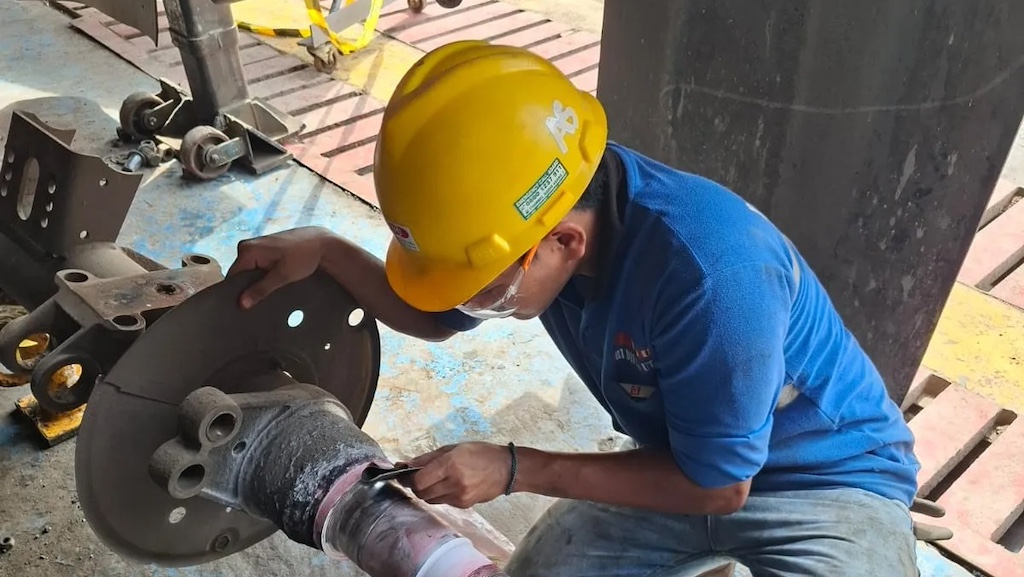
A technician checks a trailer axle component using inspection tools in the heavy equipment maintenance workshop (Photo Source: TDU)
Shifting Maintenance from Reactive to Proactive
One of the most important changes in fleet management is shifting from reactive maintenance toward a more proactive approach.
Reactive maintenance is performed after a failure has already occurred. While this approach can be appropriate in certain situations, relying on it as the primary strategy means companies are more likely to face unexpected failures.
In contrast, a proactive approach focuses on monitoring unit conditions and preventing problems before they develop into major failures.
This change can begin with simple steps, such as creating inspection checklists, establishing preventive maintenance schedules, recording failure histories, and ensuring that critical spare parts are available.
As more data becomes available, companies can evaluate failure patterns. Maintenance teams can then determine whether a component should be replaced based on its age, operating hours, actual condition, or specific wear indicators.
This strategy helps companies make maintenance decisions based on real field conditions rather than assumptions alone.
Conclusion
Trailer downtime is not simply a technical issue. In industries that depend on productivity and equipment availability, downtime can become a hidden cost that affects schedules, labor, productivity, safety, and overall operating expenses.
Technical problems such as worn brake linings, bearing failures, suspension issues, coupling problems, and air or electrical system failures can develop into major operational disruptions if they are not detected early.
Therefore, downtime prevention requires an integrated approach. Regular inspections help identify potential failures, preventive maintenance keeps components in good condition, while proper spare parts availability helps speed up repairs when problems occur.
Ultimately, the main goal of maintenance management is not simply to repair a trailer after it breaks down, but to ensure that the trailer remains ready whenever operations need it.
With the right maintenance strategy, companies can reduce unplanned downtime, control operating costs, extend asset life, and maintain consistent productivity. Because in the industrial world, every minute a unit remains out of service represents a potential cost that needs to be controlled.
Read other Articles: Trailer Components That Often Fail Without Being Noticed