Introduction
In high-intensity industrial operations, trailers are expected to remain ready for work at all times. When transportation demand increases, delivery schedules become tighter, or projects enter a busy period, trailers may operate more frequently and handle heavier workloads than under normal conditions.
These conditions put greater pressure on every trailer component. Components that previously performed well may experience increased wear when operating frequency, travel distance, and workload increase at the same time.
The problem is that not all signs of wear can be seen immediately. A trailer may still operate normally, while some of its components have already started to lose performance. If these conditions are not monitored, minor problems can develop into more serious damage and eventually lead to unplanned downtime.
Therefore, when trailers are used in intensive operations, inspections should not only be performed when a problem occurs. Maintenance teams need to understand which components have a higher level of risk and require closer attention.
Some components can even serve as early indicators that a trailer’s condition is beginning to deteriorate. Through regular monitoring, potential problems can be detected early, allowing maintenance actions to be planned before they disrupt operations.
Here are five trailer components that require extra attention when a unit is operating at high intensity.
1. Brake System: A Critical System That Works Repeatedly
The brake system is one of the most important systems on a trailer, especially when the unit is used frequently or carries heavy loads.
During every trip, the braking system operates repeatedly. The more frequently a trailer travels and brakes, the greater the workload placed on the components within the system.
Several components that require attention include brake lining, brake drum, camshaft, slack adjuster, and other supporting components.
Brake lining that becomes too thin can reduce braking effectiveness. Meanwhile, a worn brake drum can affect the contact between braking surfaces. If the braking system does not operate evenly, the load may be distributed unevenly across certain components.
During intensive operations, brake system inspections should not be based solely on the maintenance schedule. The actual condition of the components should also be monitored.
Changes in brake lining thickness, the condition of the brake drum surface, unusual noises, or abnormal braking response can be early indicators that require further inspection.
Regular inspections help ensure that the braking system continues to operate properly before the trailer is used again for high-intensity operations.
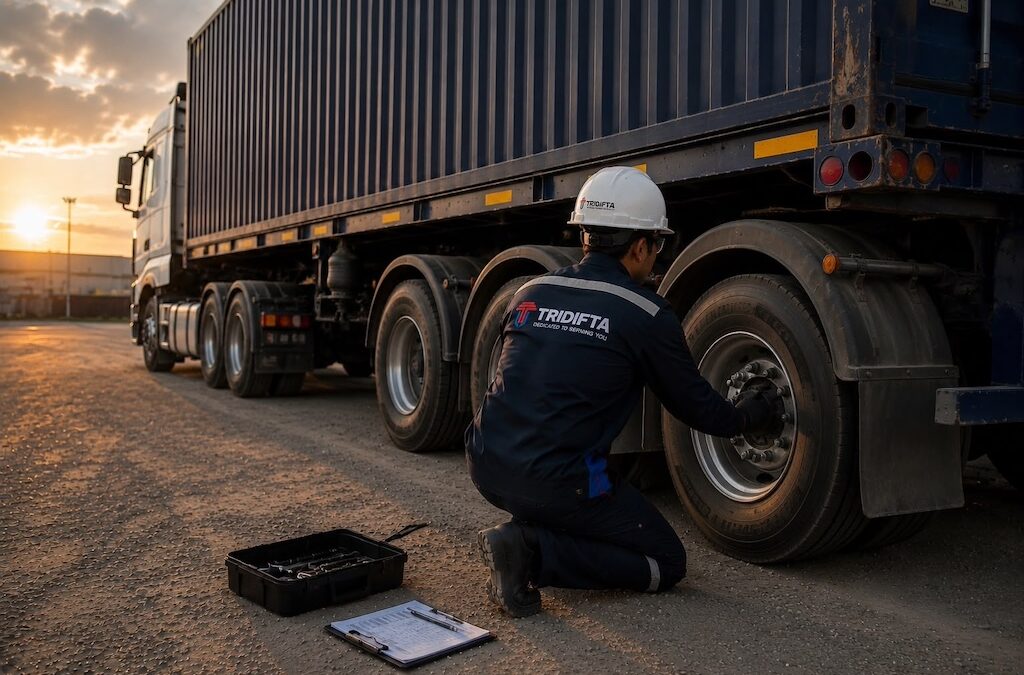
2. Axle and Bearing: Supporting the Load During Operation
Axles and bearings are components that continuously work while the trailer is moving. Both play an important role in supporting the load and ensuring that the wheels rotate properly.
Under intensive operating conditions, axles and bearings may be exposed to high workloads continuously. Load weight, travel distance, road conditions, and operating speed can all affect the level of stress placed on these components.
Bearings with lubrication problems can generate excessive heat due to increased friction. Poor seal conditions can also allow water and contaminants to enter the system and accelerate damage.
One factor that should be monitored is the temperature around the wheel-end area. An abnormal increase in temperature after the unit has been operating may indicate a problem that requires further inspection.
In addition, abnormal noises, vibrations, grease leakage, or changes in wheel condition should not be ignored.
When trailers operate under intensive conditions, monitoring the axle and bearing becomes increasingly important. Early detection can help prevent more serious damage and reduce the risk of the unit stopping unexpectedly during a journey.
3. Suspension System: Maintaining Trailer Stability
The suspension system plays an important role in maintaining trailer stability and controlling the movement of the unit during operation.
Under high-load operating conditions, the suspension system is exposed to significant stress. Uneven roads, demanding operating environments, and excessive or improperly distributed loads can increase the workload on the suspension system.
Components such as bushings, leaf springs, torque rods, and other supporting components should be inspected regularly.
Worn or cracked bushings can cause changes in suspension movement. This condition can affect trailer stability and increase the load placed on other components.
For air suspension systems, the condition of the air springs and air lines should also be inspected to ensure there are no leaks.
Changes in trailer position, instability while driving, or uneven tire wear can indicate that the suspension system requires attention.
Regular suspension inspections help maintain unit stability while preventing a chain reaction of damage to other components.
4. Coupling System and Kingpin: Connection Points That Must Not Be Ignored
The coupling system connects the tractor and trailer. Since it serves as the connection point between two units, the coupling system must always be kept in optimal condition.
Components such as the kingpin and fifth wheel handle loads and stress while the trailer is moving, turning, braking, or traveling over uneven road surfaces.
With intensive use, wear in the coupling area can occur gradually. The problem is that this wear is not always easy to detect through a simple visual inspection.
A worn kingpin or excessive clearance can affect the connection between the tractor and trailer. If not addressed promptly, this condition can increase risks to unit stability and operational safety.
Therefore, the coupling area should be inspected regularly to ensure there is no excessive wear, damage, or problem with the locking mechanism.
In addition to inspecting component condition, lubrication is also an important part of coupling system maintenance. Proper lubrication can help reduce friction and keep the components operating more effectively.
During intensive operations, the coupling system should be included in the routine checklist before the unit is used.
5. Tires and Wheel-End: Often Visible, But Not Always Thoroughly Inspected
Tires are one of the easiest parts of a trailer to inspect visually. However, checking tires should involve more than simply looking at whether the tread is still present.
During high-intensity operations, tire conditions can change quickly due to travel distance, load, tire pressure, road conditions, and the way the unit is operated.
Uneven tire wear can indicate problems with alignment, suspension, axle condition, or load distribution.
Tire pressure also needs to be monitored. Pressure that is too low or too high can affect tire performance, the fuel consumption of the towing vehicle, stability, and tire service life.
In addition to the tires, the wheel-end area should also be inspected to ensure there are no signs of excessive heat, leakage, or component damage.
Regular inspections can help detect problems before they develop into more serious failures.
During long-distance operations or high-intensity work, tire and wheel-end conditions are important factors that affect trailer safety and reliability.
Wear Monitoring Should Not Wait Until a Component Fails
One common maintenance mistake is waiting for a component to fail before taking action.
In reality, wear on most trailer components occurs gradually. Before experiencing complete failure, components usually show signs of changing condition.
These changes can include unusual noises, increased temperature, vibrations, changes in handling, uneven wear, or changes in clearance.
If these signs are detected early, companies have time to plan appropriate maintenance actions.
This is different from a situation where a component suddenly fails. In such cases, the company may need to perform emergency repairs, urgently source spare parts, and take the unit out of operation.
Therefore, component condition monitoring should be part of a condition-based maintenance strategy.
Inspection data can be used to identify wear patterns over time. This allows companies to determine which components are wearing faster and require additional attention.
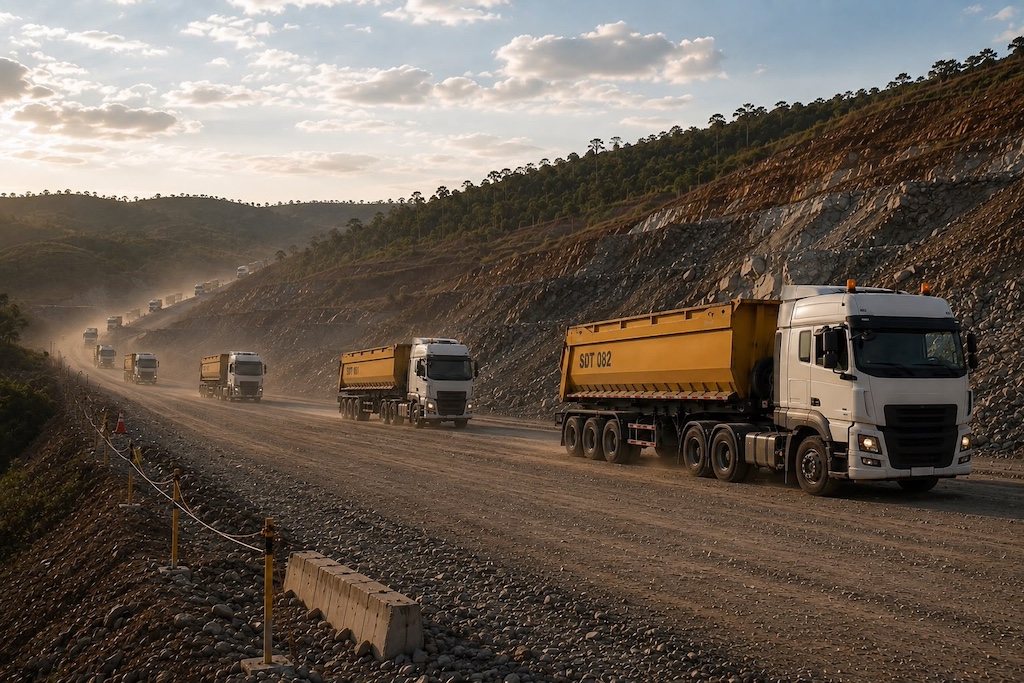
A mining truck on a dirt and rocky road in a hilly area, set against the backdrop of the afternoon sun illuminating an excavated hillside (Source: TDU)
Maintenance Strategies for High-Intensity Operations
Regularly monitoring trailer components is only the first step. The results of these inspections need to be translated into a structured maintenance strategy.
Companies can prioritize maintenance based on component criticality, actual condition, service life, and operational risk.
Safety-critical components such as the brake system and coupling system should be given the highest priority.
Meanwhile, components such as bearings, suspension components, and wheel-end components can be monitored based on their condition and wear patterns.
Spare part availability should also be included in maintenance planning. Critical components with long lead times should be prepared in advance to prevent repair delays when problems occur.
In addition, maintenance teams should maintain clear records of each unit’s repair history. These records can help companies determine when components require a more detailed inspection or replacement.
A good maintenance strategy is not simply about repairing a trailer when it breaks down. More importantly, maintenance should help predict potential problems and take action before failures disrupt operations.
Conclusion
Intensive trailer operations place greater pressure on every component within the unit. The brake system, axle and bearing, suspension, coupling system, tires, and wheel-end are among the areas that require special attention.
However, keeping a trailer reliable requires more than inspecting the unit only when a problem occurs. Component condition and wear must be monitored consistently so that potential failures can be detected early.
By combining regular inspections, condition monitoring, preventive maintenance, and proper spare part availability, companies can improve trailer reliability and reduce the risk of unplanned downtime.
Ultimately, a trailer that is ready for operation is not simply a trailer that can still move, but one whose critical components have been confirmed to be in proper and safe condition to handle its operational workload.
Read other Articles: Preventive vs Corrective Maintenance: Which One Is More Efficient?